
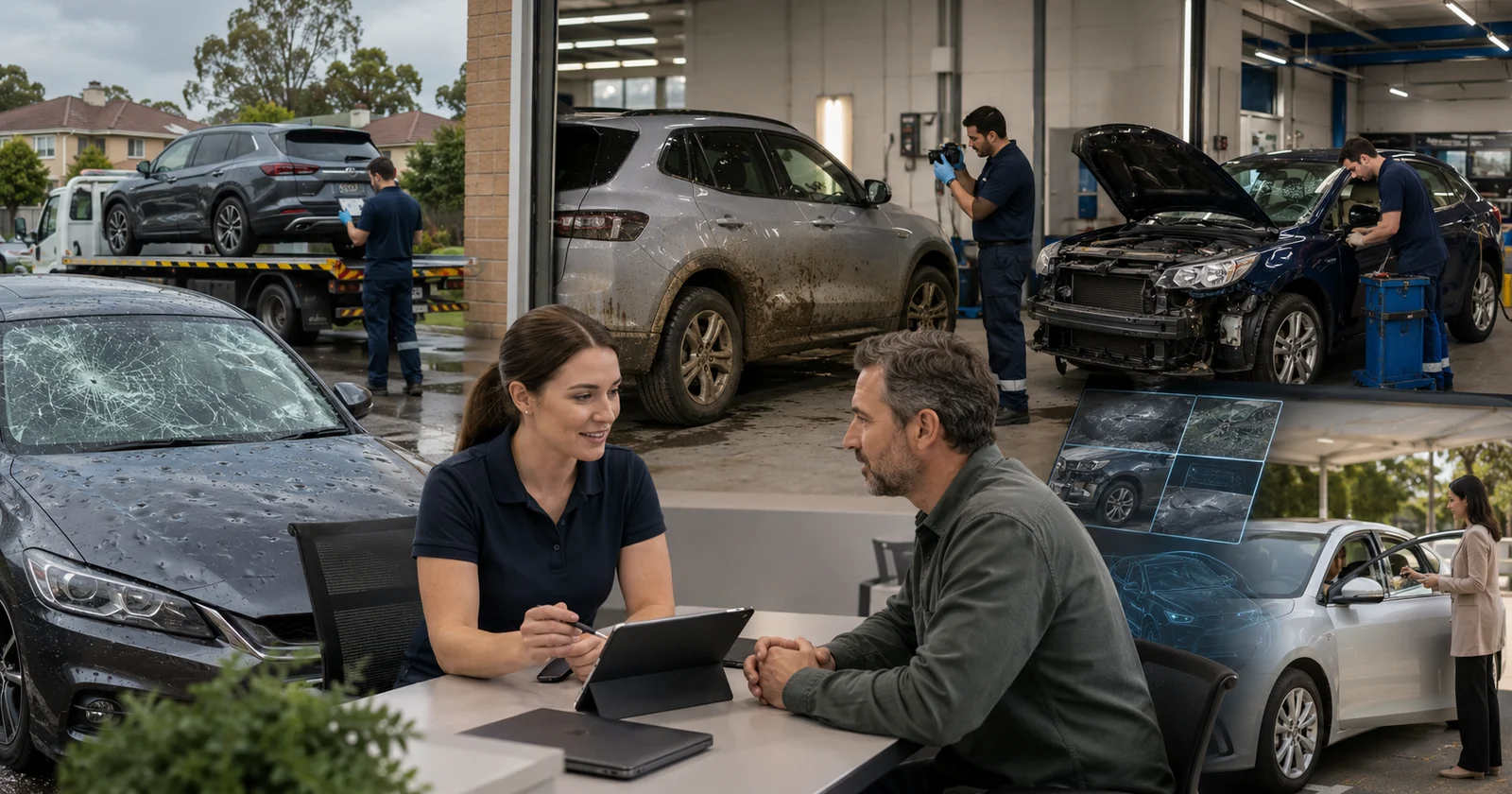
Floods and hailstorms can create significant challenges for Australian motor insurers. A single severe weather event can damage thousands of vehicles, creating a sudden increase in claims, customer enquiries, towing requests, repair assessments, and vehicle-status questions.
For customers, vehicle damage can affect their ability to commute, work, access essential services, or manage everyday responsibilities. For insurers, the challenge is to process increased claim volumes efficiently while providing clear communication and appropriate support.
A well-planned motor claims support after natural disasters strategy can help insurers manage catastrophe-related demand, improve claims triage, and deliver a smoother customer experience.
Why Natural Disasters Create Motor Claims Surges
Floods and hailstorms can affect large numbers of vehicles within a short period. Floodwater can cause significant mechanical and electrical damage, while hail can damage windscreens, roofs, bonnets, windows, and body panels.
Common flood vehicle claims and weather-related enquiries may involve:
- Water-damaged vehicles
- Hail-damaged vehicles
- Broken windscreens
- Vehicle towing
- Vehicle assessment
- Repair timelines
- Replacement vehicle arrangements
- Write-off assessments
- Claim status
- Excess and policy questions
Australian Financial Complaints Authority guidance notes that customers should not drive vehicles that have suffered water damage, highlighting the importance of safety-focused communication during flood-related events.
When thousands of these interactions occur simultaneously, traditional claims operations can quickly become overloaded.
Prepare for Increased Motor Claims Volumes
Insurers should establish catastrophe response plans before severe weather events occur.
A motor catastrophe plan can include:
- Additional claims representatives
- Dedicated catastrophe teams
- Flexible workforce arrangements
- Additional assessors
- Repairer coordination processes
- Towing and recovery workflows
- Digital claims channels
- Escalation procedures
Historical event data can help insurers estimate potential claim volumes and determine the additional resources required.
Preparation is particularly important because extreme weather can create both a sudden claims spike and a large geographic spread of affected customers.
Make Motor Claims Lodgement Simple
Customers dealing with vehicle damage need a straightforward claims process.
Insurers can make digital claims journeys easier by allowing customers to provide:
- Vehicle information
- Damage descriptions
- Photographs
- Location details
- Incident information
- Supporting documents
Government guidance states that many insurers provide relatively simple online motor claim processes and may request information such as the vehicle location, damage description, photographs, and other relevant details.
A streamlined process can reduce unnecessary calls and help claims teams begin assessment sooner.
Strengthen Flood Vehicle Claims Handling
Flood-damaged vehicles may require additional assessment because water can affect components that are not immediately visible.
Insurers need structured processes for assessing:
- Water exposure
- Electrical systems
- Engine condition
- Interior damage
- Safety systems
- Mechanical components
- Potential repairability
Clear communication is also important. Customers should understand what information is required and what the next stage of assessment involves.
Importantly, coverage depends on the individual policy. Australian guidance notes that comprehensive car insurance often covers flood damage under broader accidental loss or damage provisions, but customers should check their policy terms and conditions.
Manage Hail Damage Claims Efficiently
Large hail events can produce a different type of operational challenge. Thousands of vehicles may require inspection and repairs within a relatively short period.
Hail damage claims can involve:
- Roof and bonnet damage
- Damaged windows
- Windscreen damage
- Paint and bodywork
- Multiple-panel damage
- Potential total-loss assessments
Insurers can use centralized assessment processes, digital image submission, repairer networks, and automated appointment scheduling to manage higher volumes.
AI-assisted image and document workflows may also help organize information for claims teams, while qualified assessors remain responsible for appropriate damage evaluation and coverage decisions.
Use AI for Motor Claims Triage
When a catastrophe generates thousands of claims, prioritizing cases becomes essential.
Motor claims support after natural disasters can be strengthened through AI-assisted triage that categorizes enquiries and claims according to factors such as:
- Type of damage
- Vehicle condition
- Safety concerns
- Repair requirements
- Customer circumstances
- Claim complexity
- Urgency
For example, a vehicle that may be unsafe to drive could require faster intervention than a routine cosmetic hail-damage claim.
AI can assist with classification and routing, but decisions involving coverage, liability, complex assessments, or customer vulnerability should remain subject to appropriate human oversight.
Improve Storm Vehicle Insurance Communication
Customers often contact insurers repeatedly because they do not know what is happening with their vehicle claim.
Proactive updates can help reduce this uncertainty.
Insurers can use:
- SMS
- Customer portals
- Mobile applications
- Digital messaging
- Phone support
Customers can receive appropriate updates about claim registration, assessment appointments, towing arrangements, repair progress, or next steps.
This creates a more transparent storm vehicle insurance experience and can reduce repeat contacts.
Coordinate Repairers and Towing Services
A major weather event can create pressure beyond the insurer’s contact centre.
Repairers, towing providers, assessors, parts suppliers, and vehicle storage facilities may all experience increased demand.
Insurers should establish connected workflows that allow claims teams to understand:
- Vehicle location
- Towing status
- Assessment status
- Repairer allocation
- Repair progress
- Parts availability
- Expected completion
Better coordination can reduce delays and prevent customers from having to contact multiple parties for basic updates.
Build Motor Catastrophe Support Capacity
Large natural disasters require insurers to scale beyond normal operating models.
A flexible motor catastrophe support model may include:
- Cross-trained claims employees
- Dedicated catastrophe teams
- Additional claims specialists
- Digital self-service
- Automated status updates
- Flexible workforce arrangements
- Expanded repairer networks
- External operational support
Organizations such as TP Australia can support insurers by combining human-led customer experience capabilities with technology-enabled support and scalable operational resources during periods of high claims demand.
Monitor Claims Performance in Real Time
Insurers should monitor motor claims operations continuously during major flood and hail events.
Important metrics include:
- New motor claims
- Claims backlog
- Enquiry volumes
- Average response time
- Claims processing time
- Assessment turnaround
- Repairer allocation time
- First-contact resolution
- Repeat contacts
- Customer satisfaction
Real-time visibility allows insurers to identify bottlenecks and redirect resources before delays become widespread.
This is particularly important during major hailstorms, where large numbers of vehicles may require assessment simultaneously.
Learn From Every Natural Disaster
After the event, insurers should analyze claims data and customer interactions to identify opportunities for improvement.
This analysis can reveal:
- Common customer questions
- Claims processing bottlenecks
- Repairer capacity issues
- Towing delays
- Communication gaps
- Repeated documentation requests
- Opportunities for automation
These insights can improve future catastrophe planning and make motor claims operations more resilient.
ASIC has emphasized that insurers responding to severe weather events need to be adequately resourced, communicate transparently, identify vulnerable customers, and manage claims and complaints effectively.
Building a Resilient Motor Claims Model
Floods and hailstorms can create sudden and complex challenges for Australian motor insurers. A successful response requires more than simply adding additional claims agents.
A strong motor claims support after natural disasters model combines digital claims, AI-assisted triage, proactive communication, scalable staffing, repairer coordination, and real-time operational monitoring.
By improving flood vehicle claims processes, streamlining hail damage claims, strengthening storm vehicle insurance support, and developing scalable motor catastrophe support, insurers can respond more effectively when natural disasters create significant claims volumes.
The ultimate goal is to process claims efficiently while keeping customers informed, supported, and confident about what happens next.
Frequently Asked Questions
1. What is motor claims support after natural disasters?
Motor claims support after natural disasters refers to the processes, people, technology, and operational resources insurers use to manage vehicle claims following floods, hailstorms, cyclones, and other severe weather events.
2. How can insurers manage flood vehicle claims?
Insurers can manage flood vehicle claims through digital claims lodgement, structured assessment processes, safety-focused triage, automated updates, and coordinated towing and repair workflows.
3. What are hail damage claims?
Hail damage claims are motor insurance claims relating to vehicle damage caused by hail. Depending on the policy, this can include damage to body panels, glass, roofs, bonnets, and other vehicle components.
4. How can insurers improve storm vehicle insurance support?
Insurers can improve storm vehicle insurance support through proactive communication, digital self-service, faster claims triage, repairer coordination, and real-time claim-status updates.
5. What is motor catastrophe support?
Motor catastrophe support is the specialized operational capability used to manage unusually high volumes of vehicle claims following major natural disasters or severe weather events.
6. Can AI help manage motor insurance claims after natural disasters?
Yes. AI can assist with enquiry classification, claims triage, document processing, knowledge retrieval, customer communication, and routing. Human oversight remains important for complex claims and decisions requiring professional judgment.




 The Role of Land Condition Assessments in Environmental Compliance