
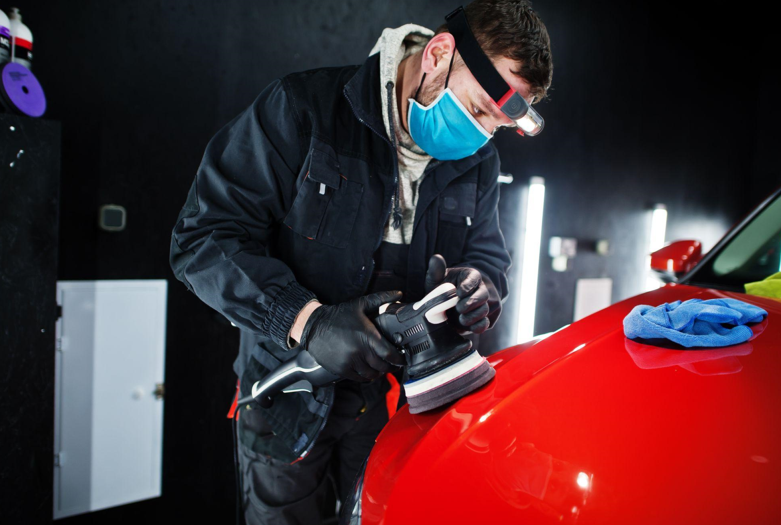
Paintless dent removal is a good consideration over repainting when you need to fix minor car dings and hail damage. In this process, the metal back is massaged into its original shape from behind.
Key Takeaways
- Paint-Safe Process: PDR uses custom steel rods and tap-down tools to massage metal back into place without damaging intact factory paint.
- Strict Eligibility: The technique only works on shallow dents with unbroken paint, whereas cracked finishes, deep creases, or plastic panels require traditional bodywork.
- Lighting Precision: Technicians rely on high-contrast LED light boards to map micro-imperfections and guide precise pressure points.
- Faster and Cheaper: Compared to standard body shops, PDR takes just 1 to 4 hours and saves 30% to 60% in repair costs.
Imagine you witness a brand-new door ding while walking out of your car in a parking lot. Isn’t it frustrating? Gone are those days when cars were sent to auto shops for days or even weeks to address body damage.
Modern auto care ensures a quicker, cleaner, and cost-effective alternative. This article discusses how small dents are fixed without repainting.
What is Paintless Dent Repair (PDR)?
Paintless Dent Repair refers to a specialised repair technique that repairs minor dents without sanding, body filler, or repainting. Considering this method for small dent repair ensures that your car retains its original factory finish and the damaged panel also restores its original shape.
Instead of covering up the dent, PDR technicians obtain access behind the damaged panel and consider custom-built hand tools to massage the metal back into its factory profile. They offer controlled and pinpoint pressure on the affected area.
When does PDR Work?
PDR is cheap, quick to done, and it keeps the original finish of your vehicle. Here are the scenarios when PDR is a good option.
- The paint is not cracked, scratched, peeled, or chipped.
- Dents are shallow and the metal is not stretched too far.
- The dent is located on roof panels, trunks, hood tops, and side doors.
- The damage has occurred due to hail or parking lot door dings.
PDR is not a one-stop solution for car scratch repair in any issues. Avoid this if:
- The underneath metal has been exposed or the clear coat has fractured (the panel needs repainting and body filler for rust prevention).
- The metal is stretched or creased excessively.
- Dents are located on seams or on sharp panel edges.
How Paintless Dent Repair is Done?
PDR is performed by examining, accessing, and massaging the metal back to its initial shape while keeping the paint intact. The steps that a professional follow are:
Step 1: Inspection and Lighting Analysis
At first, the technician inspects the size, depth, location and paint condition of the dent to understand the possibility of paintless dent repair. An LED light board is placed against the panel. With the reflections, they identify every micro-imperfection, contour shift, and depth variable within the dent.
Step 2: Gaining Access to the Backside
Technicians reach behind the metal panel as it is necessary for small dent repair. With an utmost care and high precision, they take off interior trim panels, taillights, headliners, or use existing factory access holes.
Step 3: Pushing and Massaging the Metal
Technicians apply precise bursts of pressure behind the deepest points of the dent. Here, they use specialised high-carbon steel rods, picks, and leverage tools. By working slowly inward to outward, the metal is pushed back into place fraction-by-fraction.
Step 4: Blending & Tap-Down
Often, pushing up metal leaves minor high spots on the exterior side of the car panel. In such cases, professionals use a soft-tipped tap-down tool and a non-marring mallet on the outside of the car. This smooths out the surface while offering a mirror-like finish.
Why PDR is Better than Traditional Body Shop?
Paintless dent repair can be a priority over traditional body shop for car scratch repair because of its following advantages.
| Feature | Paintless Dent Repair (PDR) | Traditional body shop |
| Factory paint | Preserved (100% original clear coat) | Lost (sanded, filled, and repainted) |
| Turnaround time | Same day (within 1 to 4 hours) | 3 to 7+ days |
| Cost | 30% to 60% cheaper on average | High labour, paint, and material costs |
| Vehicle resale value | Maintained | Might decrease due to mismatched paint or fillers |
Table: PDR vs Traditional body shop
Wrapping Up
Repainting is not always a solution to fix small dents as paintless dent repair is a better consideration if the dent is shallow or located on roof panels, trunks, and hood tops. Always consult a certified PDR specialist before committing to expensive traditional body shop quotes.
Fixing Small Dents!
Choose a renowned car repair service in Melbourne. Interact with the specialist to understand whether PDR is suitable for your car’s current condition. Get it done at lower cost and without waiting for days.


 5 Costly Mistakes to Avoid During Cool Room Installation