Ventilation is one of those systems that rarely gets attention until something goes wrong. In controlled environments — whether that is a basement conversion, a commercial kitchen exhaust run, or a sealed grow room — air movement is not a comfort feature. It is a functional requirement that affects temperature consistency, humidity control, structural integrity, and in some cases, regulatory compliance. When that system underperforms, the consequences show up quickly: mold accumulation, heat stress on equipment or plants, poor air quality, or failed inspections.
Inline duct fans sit at the center of many of these systems. They are not the most visible piece of equipment, but they carry a significant amount of operational responsibility. Selecting the wrong unit — or applying the right unit incorrectly — creates problems that are often difficult to trace back to the fan itself. Understanding how these fans work, where they belong, and what to look for before purchasing is the kind of knowledge that prevents avoidable setbacks across very different types of spaces.
What Inline Duct Fans Actually Do and Why Specification Matters
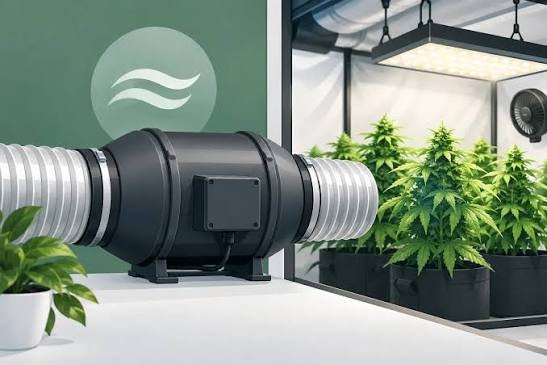
An inline duct fan is a motorized unit installed within a duct run rather than at the intake or exhaust point of a ventilation system. It draws air through the duct from one side and pushes it out the other, maintaining airflow across longer runs or through higher-resistance pathways that a passive system or basic exhaust fan cannot handle reliably. Because the fan sits inside the duct, it operates away from the occupied or conditioned space, which reduces noise exposure and keeps the primary work area unobstructed.
For those evaluating equipment options, consulting an In Line Duct Fans overview before purchasing is a useful starting point for understanding the range of available configurations and how they apply to different duct sizes and system layouts. The variety in this product category is broader than most buyers expect, and choosing by duct diameter alone often leads to mismatches in motor capacity, static pressure tolerance, and long-term reliability.
The Role of Static Pressure in Fan Selection
One of the most misunderstood aspects of fan selection is static pressure. Many buyers focus entirely on airflow volume, measured in cubic feet per minute, without considering the resistance the fan will need to overcome inside the duct system. Static pressure builds up whenever air has to move through bends, filters, carbon scrubbers, or long horizontal runs. A fan that moves an impressive volume of air in open conditions may perform far below expectations when installed in a real duct configuration with multiple bends and a filter at the intake.
This is why manufacturers provide performance curves rather than single airflow numbers. A performance curve shows how a fan behaves across a range of resistance conditions, not just at zero resistance. Buyers who skip this detail often end up with a fan that runs constantly but fails to maintain the airflow the space actually requires. In sensitive environments, that shortfall has direct consequences for temperature and humidity — two variables that are rarely forgiving when they drift out of range.
Motor Type and Its Impact on Operational Longevity
Inline duct fans are available with different motor configurations, and the choice affects both how the fan performs over time and how much energy it consumes. EC motors, which use electronically commutated technology, are generally more energy-efficient and produce less heat during operation compared to standard AC induction motors. In environments where fans run continuously — such as grow rooms or commercial food preparation areas — the cumulative energy difference becomes significant over months of operation.
Beyond energy, motor type influences how the fan responds to variable conditions. Some EC motor models include built-in speed control compatibility, which allows the fan to be paired with environmental controllers that adjust airflow based on real-time temperature or humidity readings. This is a meaningful operational advantage in spaces where conditions shift throughout the day or across seasonal changes.
Grow Room Applications: Precision Over Power
Controlled cultivation environments present a specific set of challenges that make fan selection more consequential than in general ventilation applications. Plants respond to changes in vapor pressure deficit, CO2 concentration, and leaf surface temperature — all of which are directly influenced by how well air moves through the canopy and out of the space. An oversized or undersized inline duct fan in this context does not just create inefficiency; it disrupts the environmental stability that determines crop yield and quality.
Managing Heat from Lighting and Equipment
High-intensity lighting generates substantial heat, and that heat accumulates quickly in a sealed grow environment. Without adequate exhaust capacity, canopy temperatures rise, which affects transpiration rates and can cause stress responses in plants that reduce productivity. The inline duct fan responsible for exhausting this heat needs to be sized to handle not just the volume of the room but the additional thermal load introduced by the lighting system and any other heat-generating equipment inside the space.
Many growers also introduce CO2 supplementation, which means the room is not simply exchanging air with the outside at all times. The ventilation system needs to balance CO2 retention during lights-on periods with adequate heat removal, which often requires a fan with variable speed control rather than a fixed-speed unit. A controller that responds to temperature thresholds allows the grower to maintain CO2 levels while still pulling excess heat before it reaches damaging levels.
Odor Control Integration
Carbon filtration is standard in many cultivation environments, and the presence of a carbon filter in the duct system significantly increases resistance. A fan that was marginally sized for the room without a filter may prove completely inadequate once the filter is installed and loaded with use. This is a common planning error. The fan should be selected with the filter’s resistance factored in from the beginning, not added as an afterthought after the system is already operational.
Basement and Residential Ventilation: Moisture, Air Quality, and Code Considerations
Basements present a different category of ventilation challenge. Unlike grow rooms, where the goal is environmental precision, basement ventilation is often about managing moisture accumulation, improving general air quality, and preventing the conditions that lead to mold growth or structural damage. According to the U.S. Environmental Protection Agency, moisture control is the single most important factor in preventing mold development in indoor spaces, and ventilation is one of the primary tools for achieving it.
Choosing Quiet Operation for Living Spaces
Noise tolerance in a residential setting is entirely different from what is acceptable in a mechanical room or commercial facility. Inline duct fans are inherently quieter than wall-mounted or ceiling-mounted exhaust fans because the motor sits inside the duct run and is physically separated from the occupied space. However, not all inline fans are equally quiet, and the duct configuration itself contributes to noise transmission if it is not properly designed.
Fans with rubber-isolated mounting points or flexible duct connectors reduce the vibration that travels through the duct walls into the living area. This is a detail worth confirming before purchase, particularly if the fan will be installed in a duct that runs through finished ceilings or walls where vibration noise would be noticeable to building occupants.
Regulatory and Building Code Awareness
Basement renovations that include ventilation work are often subject to local building codes that specify minimum air exchange rates for habitable spaces. In some jurisdictions, mechanical ventilation must be designed to meet standards set out by organizations such as ASHRAE, which publishes widely referenced guidelines on acceptable indoor air quality and ventilation rates for residential and commercial buildings. Selecting an in line duct fan without understanding the code requirements for the specific application can result in a system that does not pass inspection, requiring retrofits that are more disruptive and costly than getting it right initially.
Commercial Spaces: Reliability, Redundancy, and Maintenance Access
In commercial environments — restaurants, warehouses, server rooms, manufacturing areas — ventilation systems are infrastructure. They are not adjusted seasonally or reconsidered annually. They are expected to perform continuously with minimal intervention, and when they fail, the operational impact is immediate. Selecting in line duct fans for commercial applications requires a different evaluation framework than residential or controlled-environment agriculture.
Continuous Duty Ratings and Operating Hours
Not all fans are designed for continuous operation. Residential-grade fans often carry duty ratings that assume the unit will cycle on and off throughout the day. Installing such a fan in an application where it will run twelve to twenty-four hours a day shortens its service life substantially and increases the likelihood of motor failure at an inconvenient time. Commercial-rated in line duct fans are built with motors and bearings designed for extended duty cycles, and this distinction should be confirmed in the product documentation before purchase.
Accessibility for Inspection and Replacement
The physical placement of an inline fan within a duct run determines how easy or difficult it will be to service or replace. In a commercial building, this has cost implications over the life of the system. Fans installed in accessible ceiling plenums or mechanical chases are far easier to reach than those buried in finished wall cavities. Planning for access at the time of installation is much simpler than retrofitting an access panel after the fact, and it reduces labor costs for every service event over the system’s lifetime.
Bringing the Selection Process Together
Choosing the right inline duct fan is not primarily a product question — it is a systems question. The fan’s role within the larger ventilation circuit, the resistance it will encounter, the duty cycle it must sustain, and the sensitivity of the environment it serves all shape what the right unit looks like in practice. A fan that performs well in one application may be entirely wrong for another, even if the duct diameter and listed airflow appear similar on paper.
Taking the time to assess each environment on its own terms — accounting for thermal loads, static pressure, noise constraints, regulatory requirements, and maintenance realities — produces selections that hold up over time. That disciplined approach applies whether the space is a basement being converted into a livable area, a commercial grow operation managing crop consistency, or a commercial kitchen managing air quality and code compliance. The fan is only one component, but it is the one that determines whether the rest of the system actually works as intended.